Ljubljana · Wednesday 28 October · 16:40
Cloudy.
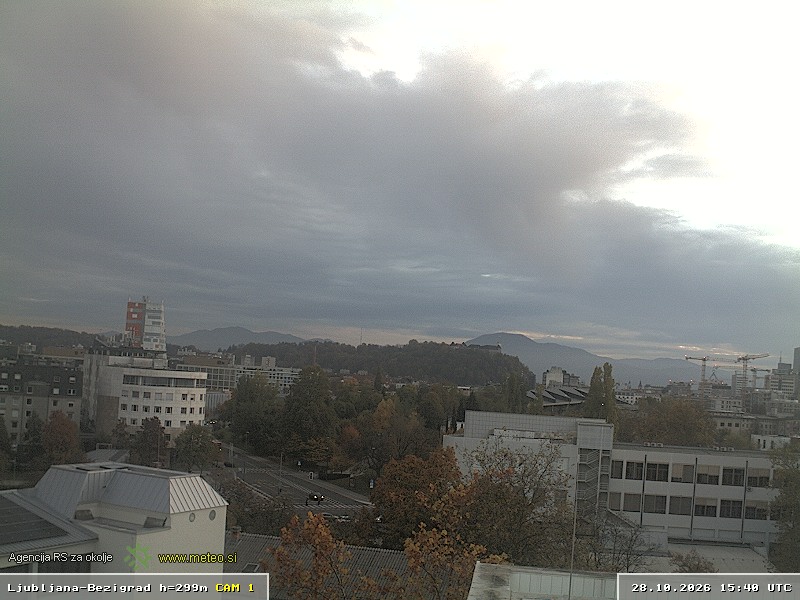
Fairly sure · visibility 44 km
Tomorrow morning: more likely no fog. Mornings like this turn grey one time in three.
No fog, no sun. Ljubljana in power-saving mode.
The fog's diary · 16:40 · RSS
Those clouds aren't mine. When I come, I'm lower.
— The fog
Fog in numbers
The numbers, fog or no fog.
44 km
of visibility. By the sensor you'd see as far as Grintovec (32 km), but not Triglav (63 km).
distances from the sensor in town; it can't tell what's in between
9 h
of fog last time: today from 01:00 to 10:10, with 20 min of sun in between.
fog or the lid, Ljubljana
−4.2 °C
That's how much colder it is on Krvavec (1742 m) than in town. The textbook says −9.4 °C: no inversion, but the air up there is warmer than it should be.
textbook: −6.5 °C per km of height · the hills are tens of kilometres apart
18 µg/m³
PM10 in town. Fairly clean air, for Ljubljana.
ARSO, hourly mean to 16:00 · Celovška 20 · daily limit 50
The last 24 hours
Nobody promised sun. It came anyway: 30 minutes.
Escape plan
Where's the sun tomorrow?
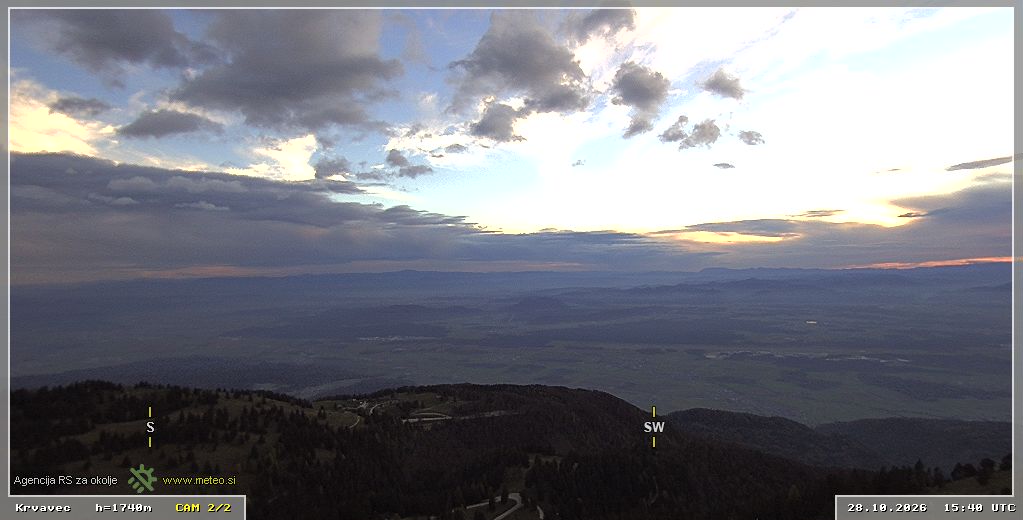
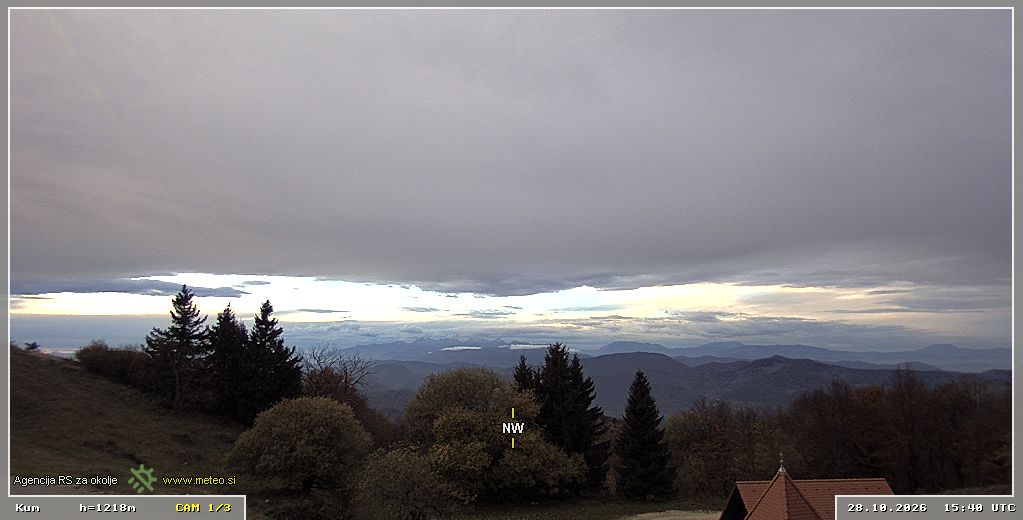
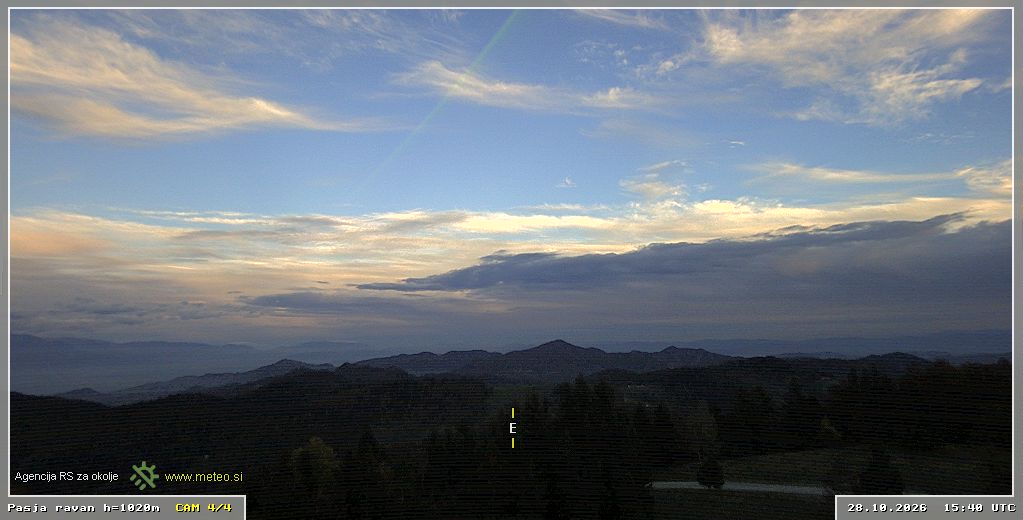
The clouds are above every hill, from 2,500 m up. Running uphill won't help: even Krvavec is under them.
- Rožnik 394 m45 min on foot from Prešeren Squareunder the clouds
- Šmarna gora 669 m20 min to Tacen, then 1 h on footunder the clouds
- Polhograjska Grmada 898 m25 min to Polhov Gradec, then 1 h 15 min on footunder the clouds
- Krim 1107 m40 min to Rakitna, then 1 h on footunder the clouds
- Kum 1211 m1 h 10 min by car, nearly to the topunder the clouds
- Krvavec 1742 m40 min to the cable car, then 15 min upunder the clouds
Times are rough and assume no traffic. In fog there's always traffic.
The view from above
What it looks like from up there.
 Ljubljana
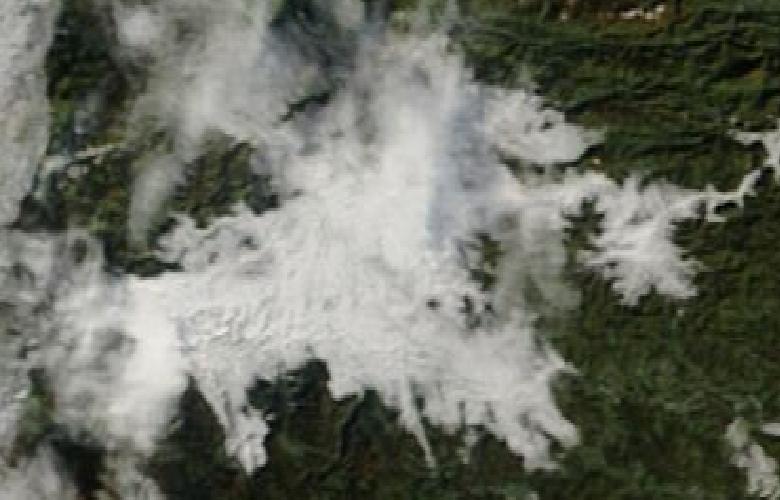 Ljubljana
Season 2026/27
The score up to 26 October.
8fog days
3days without a minute of sun
1 daythe longest run without sun.
By 26 October, the 1950s averaged 15.2 fog days, the last ten seasons 11.4. Below average so far. Don't celebrate yet: December is coming.
On this day. On this day in 1949: day 1 of 12 in a row without a minute of sun. Fog on this date in 32 of 78 winters, most recently in 2025.
Our own count (fog from instruments, not a logbook) has run since 27 October 2026. Its first full day is today, if ARSO holds out till midnight, and it joins the count overnight.
Source: ARSO's log for Ljubljana, which runs a day or two behind.
Hall of shame
Ljubljana, ARSO's station at Bežigrad, October-to-March seasons since 1948/49.
- Foggiest season
- 1951/52: 119 fog days out of 183.
- Longest run without sun
- 22 days, three times, and each has a name now: the Advent Lid (1964), the Christmas Gloom (1973/74) and the New Year Dark (1997).
- Least sun
- 1950/51: 279.8 hours of sun in six months.
- Darkest November to January
- 1968/69: 69.9 hours of sun in three months.
- The last 10 seasons
- 2017/18: 63 fog days and 73 without sun.
- Least fog
- 35 days, in 2000/01, 2002/03 and 2004/05.
Was it worse back then? Yes.
An average October-to-March season, by decade.
fog daysof them, not a minute of sun
- 1950s: 94 fog days, 41 of them without a minute of sun.
- 1960s: 96 fog days, 42 of them without a minute of sun.
- 1970s: 74 fog days, 34 of them without a minute of sun.
- 1980s: 60 fog days, 20 of them without a minute of sun.
- 1990s: 45 fog days, 14 of them without a minute of sun.
- 2000s: 44 fog days, 13 of them without a minute of sun.
- 2010s: 54 fog days, 21 of them without a minute of sun.
- 2020s: 48 fog days, 10 of them without a minute of sun.
A fog day: the observer logged fog, fog with the sky visible, or ice fog.
Share the misery
Send it to someone who loves talking about fog.
The link shows a card with the current state. No sign-up, no tracking.
A question
How many Ljubljana winters have you got behind you?
We count answers, not people. The author has more than 40.
Why we say so
- Visibility in Ljubljana: 44 km.
- Topol (692 m): above the fog.
- Kum (1211 m): above the fog.
- Krvavec (1742 m): above the fog.
- Cloud cover: 8/8.
How we measure
Ljubljana every 10 minutes (ARSO's station at Bežigrad), Brnik every half hour, four hills from 692 to 1742 m, the ICON-D2 and ICON-EU forecasts, and Meteosat every 10 minutes. Every night we check whether the 10:00 call held, and the evening's bet on the morning.
The score shows after 5 foggy mornings. Until then, take our word for it, or don't.
Data: status.json · records.json · short